
24th December 2025 – Written by Enorha Guimard
A nursery by the sea

Crossing the desert and the outback of Australia to see one of the most gentle and beautiful animals on this planet. My excitement was overwhelming; my heart beat faster with every kilometre. I had left the cold winter of Victoria behind, and as I crossed into South Australia, I felt the warm sun on my face for the first time in weeks.
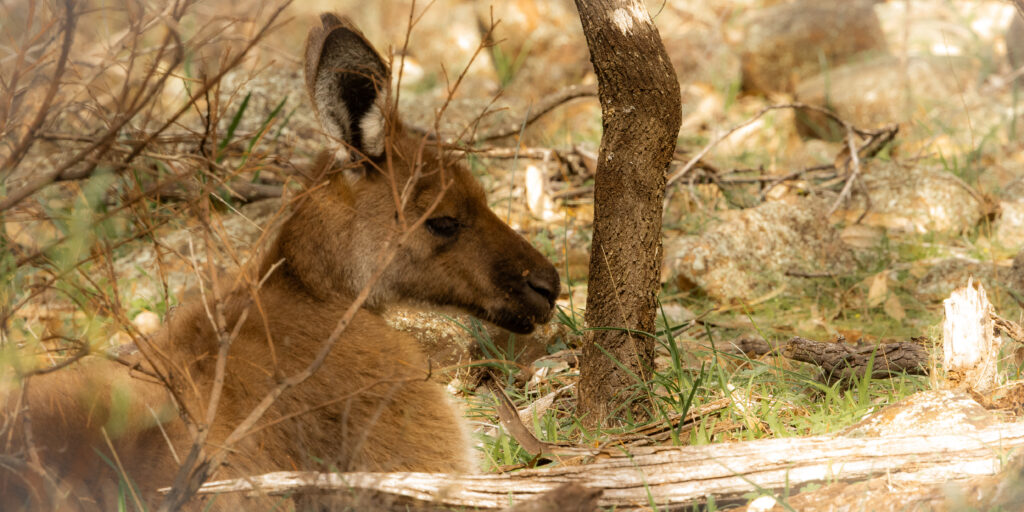
There’s something strangely captivating about crossing the outback. A landscape that feels both empty and alive at once. The road unwinds through a vast, ochre-coloured land, where time seems to stretch and bend. Low shrubs cling to the red earth, the heat dances above the asphalt, and every now and then, I could see through the window of the car a wedge-tailed eagle circles overhead. Occasionally, a flash of movement breaks the stillness. A lone kangaroo, half-hidden in the shade of the bush, resting through the heat of the day. It lifts its head, alert and calm, then disappears again into the rustling scrub.
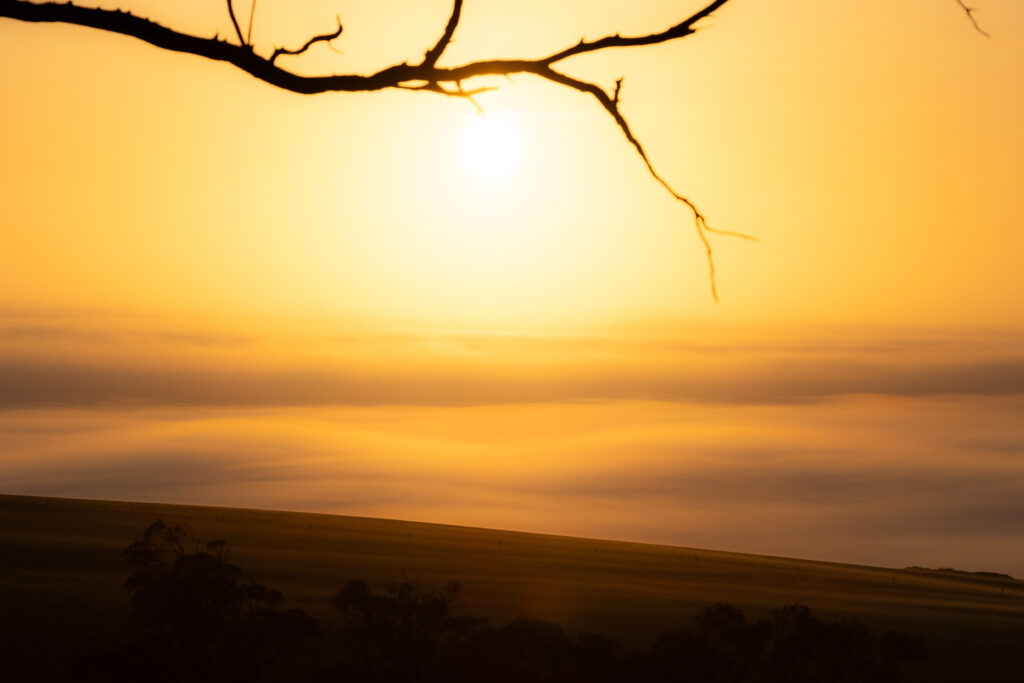


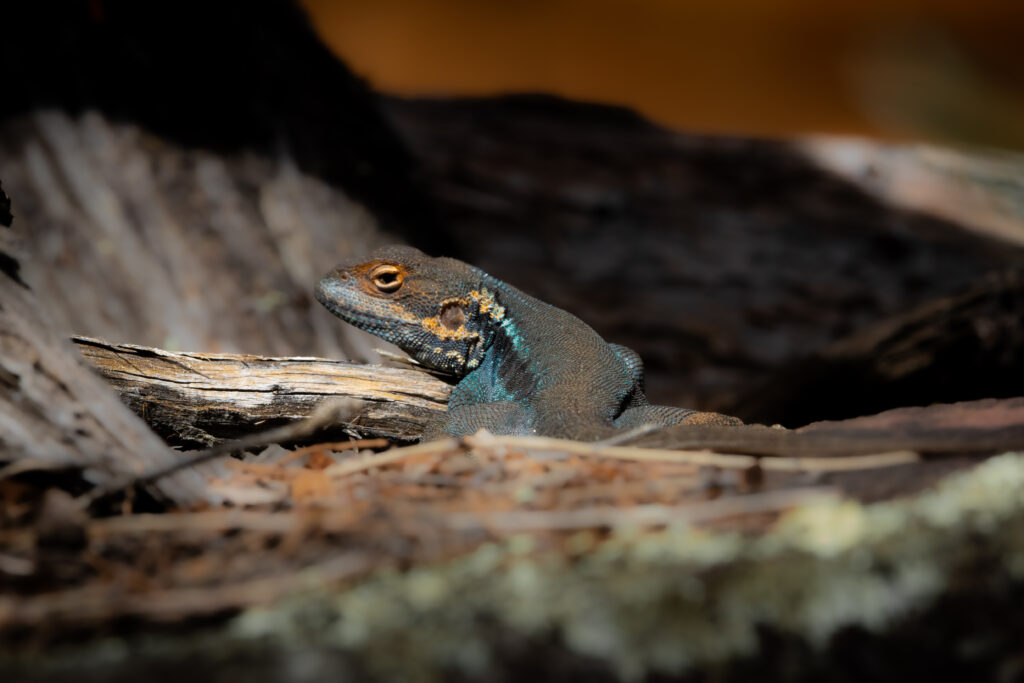
The red fades to gold, then to green, and finally, to blue, that striking turquoise blue. The ocean appears like a mirage, shimmering at the edge of everything. Reaching the coastline felt like arriving at another world. A place where the land breathes differently. We just arrived to the home of the one of the largest breeding grounds of southern right whales: Fowlers Bay.
Australia is a beautiful home for the giants during their breeding season. Most people know it for its humpback whales, but its southern right whales remain one of the country’s best-kept secrets. What makes their presence even more captivating is the journey to reach them. Crossing the outback, far from civilisation, driving through endless red desert just to stand on a wild coastline and watch these gentle giants return to their ancient nurseries.
Fowlers Bay is the second largest breeding ground after Head of Bight. The place feels wild, remote, almost hidden, like a well-kept secret tucked away at the edge of the continent. Here, I could walk for hours along the beach without seeing another soul, only the sound of the wind and waves. Just a few hundred metres from shore, mothers and their calves played in the shallows, completely at ease in this peaceful sanctuary.


Home to a shore-based whaling station in the 1800s, this bay has a deep and complex history with whales. Once abundant along the coast, southern right whales were heavily hunted for their oil and baleen. By the early 20th century, the population had been driven to the brink of extinction, and the whales vanished from these waters.
There is still physical evidence of the past here: bones resting beneath the surface and in the bay, silent remnants of a time when these giants were not admired, but hunted and exploited.
But decades after commercial whaling ended, the ocean slowly began to heal. The Southern right whales started to return to their ancient breeding grounds, including Fowlers Bay. Today, this remote sanctuary has become one of the most important and peaceful calving areas in Australia.
The whales that come here now are a new generation, one that never knew whaling, and hopefully never will again.

In Australia, two distinct populations of southern right whales live along the southern coastline. The south-eastern population found in Victoria, Tasmania and New South Wales is classified as endangered, with only around 300 individuals. The south-western population in South Australia and Western Australia is larger, with about 4,000 whales, and is listed as vulnerable
“Right whales” were given their name because whalers considered them the right whales to hunt. They swam slowly, stayed close to the coast, and when killed, their bodies floated, making them tragically easy targets. Because of this, right whales became the foundation of the early whaling industry almost everywhere it existed.
Their numbers were devastated across the world. In some regions, like the Bay of Biscay in France, they were hunted to complete extinction. In others, including Australia, they were pushed to the very edge of disappearing forever.
Today, Australia holds two small recovering populations, one still endangered, one vulnerable, a reminder of both the harm we once caused and the resilience of these gentle giants.


And then, there was Head of Bight. There are so many things to say about this place. Around three hours from Fowlers Bay, Head of Bight is the main breeding ground for this species in South Australia. What makes it so special is that there are no boats at all. We observe these beautiful creatures from land. It feels out of this world.
No engines, no wakes on the water, just whales and silence. I am so used to being with whales from a boat, to sharing their world from the sea. But seeing them from land, with nothing between us but air and distance, was deeply life-changing. It reminded me that sometimes, the most powerful encounters happen when we simply stay still.
The high cliffs of Head of Bight make the place feel even more wild and unreachable. And although it is well known as a land-based whale-watching site, it never felt crowded. Instead, it felt untouched, an ancient meeting place between land, ocean, and giants. When I arrived there, for the few days I was in the area, I spent all of my days by the ocean with the whales


The calm of the mother in the bay, resting after a long journey to give birth. Her calf stayed close by her side, first resting, then little by little becoming more active, circling her, swimming up and down to feed, always returning to her.
I remember one mother and calf I was focusing on through my camera. The mother rested for nearly thirty minutes while the calf swam alongside her, nursing. Then, slowly, she began to wake. She lifted her massive tail to the surface, right beside her calf. It was striking to realise that the calf was already almost the size of her tail.
She surfaced, opened her mouth slightly, and for a brief moment I could see her baleen plates. Then she dove deep again, gathering speed. That was when I knew she was about to breach. Her calf followed, staying close to the surface, and suddenly the mother exploded out of the water in a single, powerful breach, sending a deep echo across the bay. After such a long rest, it felt as though she needed that one jump just to stretch.
What happened next was one of the most touching things I have ever witnessed between two living beings. There was so much care, so much tenderness between the mother and her calf. We know that baleen whales tend to be solitary, that a calf may stay with its mother for around a year before gradually becoming independent. What we don’t really know is what happens after that. Do mothers ever meet their previous calves again? Do they recognise one another? When you witness such closeness, such devotion, it is hard to imagine that these bonds simply disappear.
Somewhere in the vast ocean, between Australia and Antarctica, I often wonder if a calf, now grown, might still recognise its mother when their paths cross. If their calls feel familiar, as they do in so many other species. If recognising a voice is a form of reassurance, a quiet reminder of where they come from.
This will likely always remain a mystery. And perhaps that is what makes it so fascinating. The relationship between a mother and her calf is one of the most beautiful and least understood in the animal kingdom. Their calls, spreading endlessly through the ocean, are like a symphony that never truly stops, carried across distances we can only imagine.


And among all these wonders, I saw a rare glimpse of beauty in the ocean. That day, one calf stood out from all the others. Almost white, glowing against the dark silhouette of its mother, it felt like an apparition in the bay.
White calves among Southern Right Whales are extremely uncommon, the result of a rare pigmentation anomaly. Seeing one here, in this protected breeding ground, felt almost unreal.
It is estimated that less than 5% of southern right whale calves are born with white or very light pigmentation. Most of these white calves are not albino nor leucistic, but have an X-linked pigmentation pattern known as grey morphism. As they grow older, their skin usually darkens, and they take on the typical dark grey or black colouration of souther right whales. The calf stayed close to its mother, strong and curious, wrapped in the same tenderness and care I had witnessed in every other pair. Colour did not change the language between them.
It was on my last stop at the Bight that I encountered this small treasure of the ocean. Writing about this journey now, I know words will never truly be enough to describe how unique and powerful these moments were. Moments like these are what I live for. Another place discovered, another piece added to the whale dreams that shape my life. Memories I carry with me, feeling incredibly lucky to live this life alongside whales. Emotions rush in all at once: a deep happiness, gratitude, and the fulfilment of a childhood dream I never stopped believing in


